Case study: obtaining and legalising a Thai police clearance certificate for use abroad
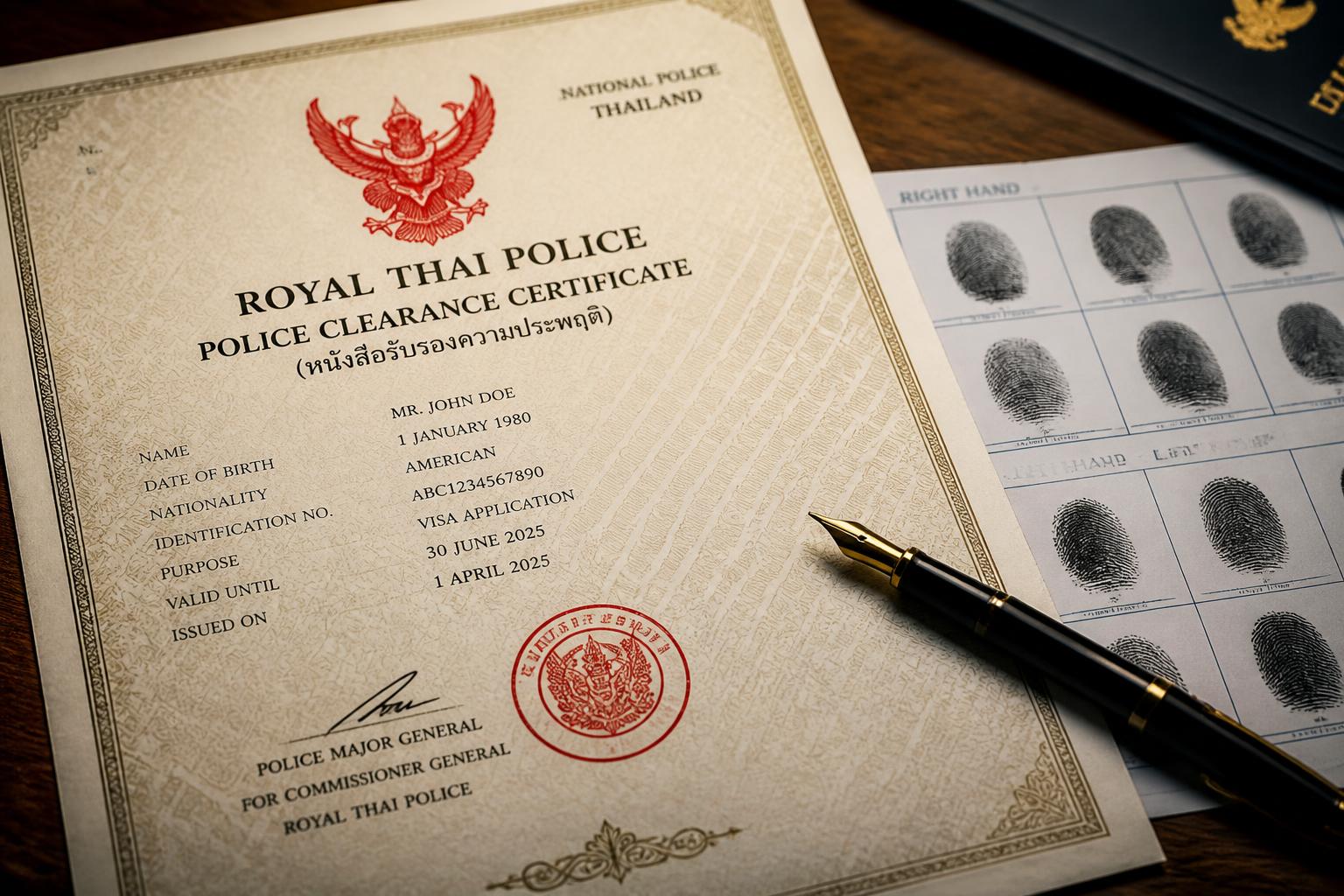
A Thai police clearance certificate is issued by the Royal Thai Police Clearance Service Centre after fingerprinting. Issuance commonly takes several weeks. The certificate is then translated, the translation certified, and the set legalised at the Department of Consular Affairs, with a destination-embassy layer where required. Most destinations accept the certificate only within three to six months of issue.
Who this is for: Applicants for migration, work or residency visas, professional registration abroad, and employers requiring a criminal record check for staff relocating overseas.
Reviewed by our advisory team (15+ years combined experience) · Last updated
Key facts
| Issuing authority | Royal Thai Police — Police Clearance Service Centre |
|---|---|
| Mandatory step | Fingerprinting on an official form; remote applicants use a Thai embassy abroad |
| Issuance time | Commonly several weeks; longer where records need manual checking |
| Validity usually demanded abroad | Commonly 3–6 months from issue |
| Follow-on steps | Certified translation, consular legalisation and, where required, embassy certification |
Documents you need
- Passport and Thai ID card (original plus copies)
- House registration (thabian baan)
- Fingerprint form completed at a police station or a Thai embassy abroad
- Evidence of purpose — visa lodgement letter, employer request or licensing body request
- Name-change or marriage documents where the current name differs from earlier records
Step-by-step process
1. Prepare the application and purpose evidence
The application must state the destination country and the purpose; a mismatch here is the most common cause of a re-application.
Handled by: Advisory team with the applicant · Typical time: 1 working day
2. Fingerprinting
Fingerprints are taken on the official form at a police station in Thailand or at a Thai embassy for applicants overseas.
Handled by: Police station or Thai embassy · Typical time: Same day appointment
3. Lodge with the Police Clearance Service Centre
The complete file is submitted and tracked; the centre performs the record search and issues the certificate.
Handled by: Royal Thai Police · Typical time: Several weeks, case dependent
4. Translate and certify the translation
The certificate is translated with names matched to the passport, and the translation is certified for consular submission.
Handled by: Translation team · Typical time: 1–2 working days
5. Consular legalisation and embassy certification
The set is legalised at the Department of Consular Affairs, then certified at the destination embassy where that country still requires it.
Handled by: Consular Affairs and destination embassy · Typical time: 1–3 then 2–10 working days
Common reasons files are rejected
- Timing the application badly, so the certificate ages past the destination's validity window while the visa file is assembled.
- Fingerprints taken on the wrong form or of insufficient quality, which forces a repeat.
- Stating a purpose or destination that does not match the visa application.
- Omitting former names, so the record search does not cover the applicant's full history.
- Assuming the certificate alone suffices — most destinations also require the translation and legalisation layers.
Comparing the available routes
| Option | Use when | Typical time | Note |
|---|---|---|---|
| Apply in Thailand in person | The applicant is in Thailand | Several weeks plus legalisation | Fastest fingerprinting route |
| Apply through a Thai embassy abroad | The applicant cannot travel to Thailand | Longer; adds international post both ways | Fingerprint form must follow that embassy's instructions |
| Apply through an authorised representative | The applicant has already been fingerprinted | Similar to in-person lodgement | Requires a properly drafted authorisation document |
Frequently asked questions
Can I apply from outside Thailand?
Yes. Fingerprints are taken at a Thai embassy or consulate, and the file is lodged with the Police Clearance Service Centre in Bangkok, usually through a representative. Allow extra time for international post in both directions and check the embassy's own fingerprinting instructions before you attend.
How long does the certificate remain acceptable?
Thai police do not print an expiry, but most immigration and licensing bodies accept a certificate issued within the last three to six months. Plan the application so it is issued close to the date you lodge, not months in advance.
Does the certificate need to be translated?
Almost always. Destinations that do not work in Thai require a translation, and where consular legalisation is involved the certified translation must be lodged together with the Thai original. We match every name spelling to the passport before submission.
What appears on the certificate if I have no record?
The certificate states that no criminal record was found for the person searched. It reflects the record held by the Royal Thai Police at the date of the search, which is exactly why receiving authorities insist on a recent issue date.
Do I need embassy certification as well?
It depends on the destination. Some countries accept the Department of Consular Affairs legalisation alone; others still require certification at their embassy in Bangkok. We confirm the current requirement for your destination before starting the chain.
Can you handle the entire process for me?
Yes, apart from the fingerprinting, which must be done in person. We prepare the application, lodge and track it, arrange the certified translation, run the consular and embassy layers, and deliver the finished set — so you deal with one point of contact instead of four counters.
ปรึกษาทีมงานก่อนเริ่มดำเนินการ
ทีมงานของเรามีประสบการณ์มากกว่า 15 ปีในงานแปล รับรองเอกสาร และการยื่นต่อหน่วยงานราชการทั้งในและต่างประเทศ เราให้คำปรึกษาตั้งแต่การเลือกเส้นทางรับรองที่ถูกต้อง การจัดลำดับเอกสาร ไปจนถึงการแก้ไขเคสที่เคยถูกตีกลับ
- ประเมินเคสก่อนเริ่มงาน เพื่อบอกได้ว่าเอกสารชุดใดจำเป็นจริง และชุดใดไม่ต้องทำ
- วางลำดับขั้นตอนให้ถูกต้องตั้งแต่ต้น ลดความเสี่ยงถูกตีกลับและต้องเริ่มใหม่
- อธิบายข้อกำหนดของปลายทาง (สถานทูต หน่วยงาน หรือหน่วยงานต่างประเทศ) ตามที่ประกาศไว้ ณ วันที่ให้คำปรึกษา
- หากคุณไม่อยากยุ่งยาก เราดูแลให้ครบทั้งกระบวนการ ตั้งแต่แปล รับรอง จนถึงรับเอกสารคืน
ผลการพิจารณาขึ้นอยู่กับดุลพินิจของหน่วยงานปลายทาง เราให้คำแนะนำตามแนวปฏิบัติล่าสุดที่ตรวจสอบได้