Cross-border estate, will and asset administration document packages
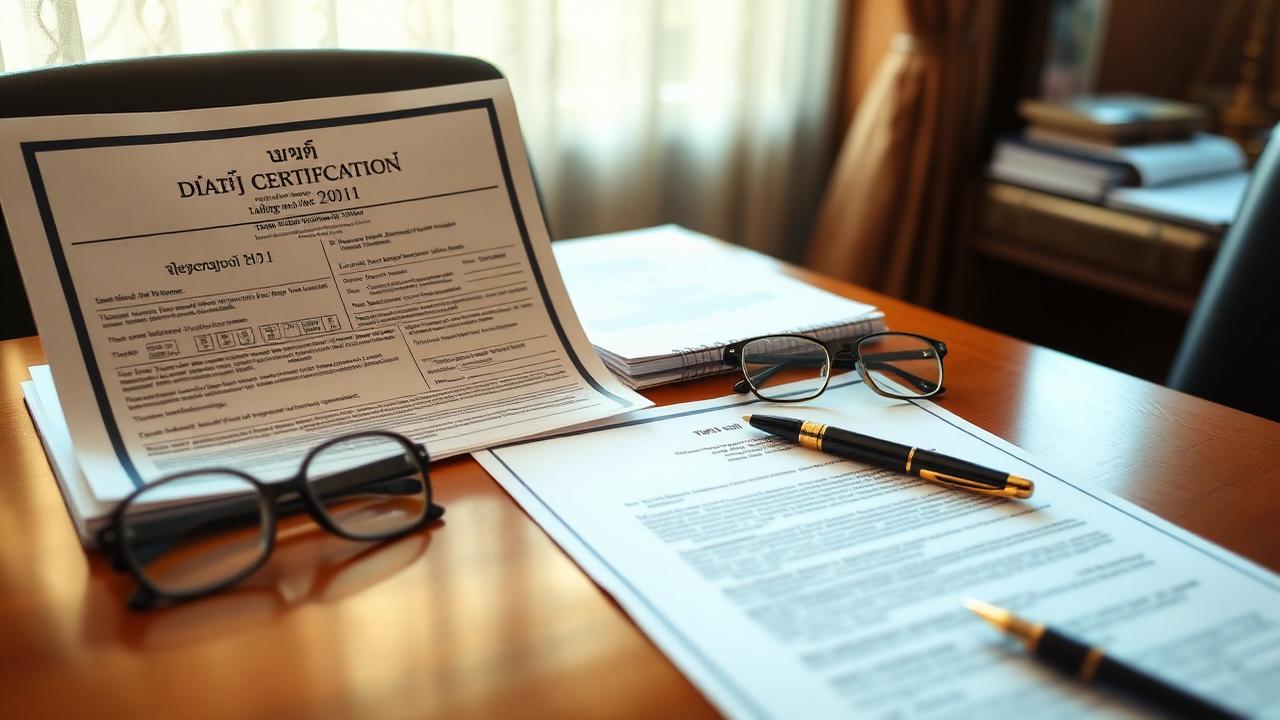
A cross-border estate file usually contains the death certificate, the deceased's house registration, documents proving each heir relationship, an heir declaration and a power of attorney for the representative handling the assets. Standard packages take 5–15 working days once source records are available, and most destinations require certified translation followed by the Department of Consular Affairs and destination embassy chain.
Who this is for: Heirs settling bank accounts, property or insurance policies abroad, and Thai families living overseas.
Key facts
| Core records | Death certificate, house registration, relationship records, power of attorney |
|---|---|
| Standard turnaround | 5–15 working days depending on volume and government queues |
| Chain | Attorney certification, certified translation, Consular Affairs, destination embassy |
| Apostille status | Thailand's accession takes effect 28 Feb 2027; until then the consular chain applies |
Documents to prepare
- Certified death certificate extract from the district registrar
- House registration of the deceased with the name struck off
- Relationship records: birth certificate, marriage certificate, legitimation record
- ID cards and passports of every relevant heir
- The will and its witness documents, if one exists
- Court order appointing an estate administrator, where the destination requires it
- Asset schedule and correspondence from the foreign bank or insurer
How the work actually runs
- 1. Read the destination requirements first
Each foreign bank or land registry specifies its own forms and legalisation level, so we start from their written checklist.
Handled by: Advisory team · Time: 1 working day
- 2. Verify the heir chain
Confirm every relationship link is documented and that name spellings match across records; if not, a same-person affidavit is prepared.
Handled by: Advisory team · Time: 1–3 working days
- 3. Re-issue source records where needed
Request fresh certified extracts when existing copies fall outside the 3–6 month window the destination accepts.
Handled by: Filing team · Time: 1–5 working days
- 4. Draft the declaration and power of attorney
Bilingual drafting in the wording the destination expects, signed by the heirs before a notarial attorney.
Handled by: Notarial attorney · Time: 1–2 working days
- 5. Certified translation of the set
Translated by a translator who accepts responsibility for the translation, with a certificate of accuracy and the original layout preserved.
Handled by: Translation team · Time: 2–5 working days
- 6. Consular and embassy filing
Submit to the Department of Consular Affairs and then the destination embassy in the required order.
Handled by: Filing team · Time: 2–5 working days per authority
- 7. Hand over with an index
The bundle is ordered against the destination checklist, with digital copies and shipment tracking.
Handled by: Operations team · Time: 1–5 working days
Why cases get rejected
- Submitting a plain photocopy of the death certificate, which foreign banks reject outright
- Name spellings that differ between the death certificate and the title deed or bank record
- Translating before certification when the destination requires the reverse order
- Missing court appointment of an estate administrator in jurisdictions that require one
- A power of attorney drafted so broadly that the bank refuses to accept its scope
Compare your options
| Option | Use when | Time | Note |
|---|---|---|---|
| Heirs handle everything personally | You are in Thailand with time for multiple authorities | 3–8 weeks | High rejection risk once the bundle contains many records |
| We assemble and legalise the package | You want one complete bundle checked against the destination rules | 5–15 working days | You only sign and receive the finished set |
| Through a Thai embassy abroad | Heirs cannot travel to Thailand | 2–6 weeks | Depends on each mission's appointment queue |
Frequently asked questions
Is a court-appointed administrator always required?
Not always. Some banks accept an heir declaration with a complete civil registration chain, but real property and high-value assets usually require a court order. We confirm the destination rule before starting.
Can a Thai will be used abroad?
Yes, once certified and translated as the destination requires, though some jurisdictions prescribe their own will format, so local law should be checked first.
Heirs live in different countries — how do they sign?
They sign before a notary or a Thai embassy where they reside, then send the documents back to be bundled. We keep the wording identical across all copies.
What if names are spelled differently?
A same-person affidavit is prepared, supported by records showing both spellings, and legalised in the same chain as the main documents.
How long does a complete package take?
Standard files run 5–15 working days. Re-issuing source records or waiting for a court order takes longer, and we confirm a realistic window after the first review.
Does every document need translation?
Only those the destination lists. Translating more than required adds cost and time without speeding up acceptance.
How recent must documents be?
Most destinations accept records issued within 3–6 months, so re-issuing close to the filing date is the safer plan.
What if I do not want to deal with several authorities?
We run the entire chain: re-issuing records, drafting declarations, certified translation, consular and embassy filing and delivery, with status reports throughout.
Cross-border estate files fail on sequencing more often than on content. Our advisers, with over 15 years of experience, read the foreign bank or registry checklist first and then set the certify–translate–consular–embassy order correctly from the outset.
Send your documents on LINE for a reviewRather not handle the paperwork? Our advisory team, 15+ years in the field, runs the whole chain for you.
Read next
Official sources
Talk to our advisory team before you start
Our team has over 15 years of experience in translation, certification, and filings with Thai and overseas authorities. We advise on choosing the correct certification route, sequencing your documents, and repairing files that were previously refused.
- A case review before work begins, so you only prepare the documents that are genuinely required
- The correct order of steps from day one, reducing the risk of a refusal and a restart
- A plain explanation of the destination authority's stated requirements as published at the time of advice
- If you would rather not handle it yourself, we run the full process end to end and return the finished file
Final acceptance rests with the receiving authority. Our guidance follows the latest verifiable published practice.