Thai work permit document packages, including overseas-issued records
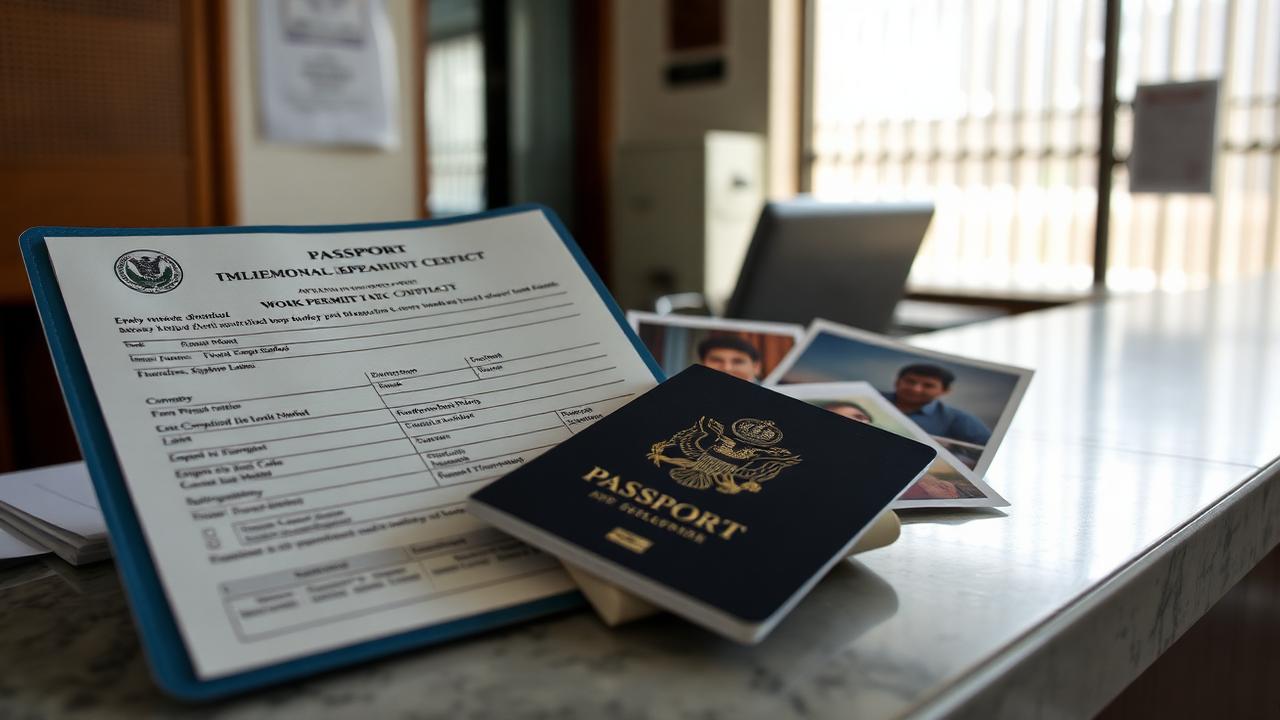
A work permit file has two sides: the employer's records (company affidavit, financial statements, tax filings) and the employee's records (passport, degree, experience letters, medical certificate). Documents issued abroad must be legalised in the issuing country and at the Thai embassy there, then certified-translated into Thai. Preparation normally takes 5–15 working days, excluding government processing.
Who this is for: Thai employers hiring foreign staff, foreign professionals relocating to Thailand and HR teams managing expatriate paperwork.
Key facts
| Two document sides | Employer set and foreign employee set |
|---|---|
| Preparation time | 5–15 working days, excluding government processing |
| Overseas documents | Legalised at source and at the Thai embassy, then certified-translated into Thai |
| Most common failure | Unlegalised degrees and name spellings that differ from the passport |
Documents to prepare
- Employee passport with a valid visa page
- Degree and transcript legalised in the issuing country
- Experience letters from previous employers
- Medical certificate in the prescribed format
- Employer's current company affidavit and shareholder list
- Company financial statements and tax filings as required
- Employment contract or letter stating position and duties
How the work actually runs
- 1. Check visa status and role eligibility
Confirm the current visa category supports a work permit application and the role is not a restricted occupation.
Handled by: Advisory team · Time: 1 working day
- 2. Review all overseas documents
Verify that degrees and experience letters carry source-country legalisation and Thai embassy endorsement.
Handled by: Advisory team · Time: 1–3 working days
- 3. Assemble the employer set
Collect the affidavit, financial statements, tax filings and staffing-ratio evidence required.
Handled by: HR and our team · Time: 2–5 working days
- 4. Certified translation into Thai
All foreign documents are translated with a certificate of accuracy and consistent passport spellings.
Handled by: Translation team · Time: 2–5 working days
- 5. Assemble to the filing format
Order documents to match the application form, add an index and check every authorised signature.
Handled by: Operations team · Time: 1–2 working days
- 6. Follow up and supply additions
When officers request further documents, we prepare and certify the supplementary round on time.
Handled by: Operations team · Time: Per authority deadline
Why cases get rejected
- Foreign degrees never legalised in the issuing country before arriving in Thailand
- Degree names spelled differently from the passport with no same-person affidavit
- Corporate records older than the accepted window
- An employment contract with a job title too broad to match the filed role
- Self-made translations with no certificate of accuracy
Compare your options
| Option | Use when | Time | Note |
|---|---|---|---|
| HR handles the file | Your company files expatriate paperwork regularly | 2–5 weeks | Works for straightforward cases where overseas documents are already legalised |
| We assemble and certify the set | There are several overseas documents and you want fewer correction rounds | 5–15 working days | Source documents are checked first to reduce rejections |
| Start with legalisation at source | Degrees or letters carry no legalisation yet | 2–8 weeks | Depends on the issuing authority and the Thai embassy there |
Frequently asked questions
How are foreign degrees legalised?
They are legalised in the issuing country under that country's system, endorsed by the Thai embassy there, then certified-translated into Thai for filing in Thailand.
Are experience letters always required?
It depends on the role and the reviewing authority; professional positions are commonly asked for experience evidence alongside the degree.
What if names differ across documents?
A same-person affidavit is prepared and legalised in the same chain so officers can link the records.
How recent must corporate documents be?
Usually issued within 3–6 months, and re-issuing close to the filing date avoids follow-up requests.
Can the employee start work while waiting?
No. Work must wait until the permission required by law is granted; starting earlier creates legal exposure for both parties.
Does changing employer restart the process?
Changing employer or position generally requires new documentation, so check the requirements before accepting a new role.
Can we translate documents ourselves?
It is not advisable; authorities normally expect a certificate of accuracy naming the responsible translator.
Can you manage the whole file?
Yes. We review both the employer and employee sides, sequence the legalisation, certify translations and assemble the filing set, flagging risks in advance.
Delayed work permit files are usually caused by overseas documents legalised in the wrong order, not by the form itself. Our advisers, with over 15 years of experience, check the source-country requirements first and plan the whole chain to finish in one pass.
Send your documents on LINE for a reviewRather not handle the paperwork? Our advisory team, 15+ years in the field, runs the whole chain for you.
Read next
Official sources
Talk to our advisory team before you start
Our team has over 15 years of experience in translation, certification, and filings with Thai and overseas authorities. We advise on choosing the correct certification route, sequencing your documents, and repairing files that were previously refused.
- A case review before work begins, so you only prepare the documents that are genuinely required
- The correct order of steps from day one, reducing the risk of a refusal and a restart
- A plain explanation of the destination authority's stated requirements as published at the time of advice
- If you would rather not handle it yourself, we run the full process end to end and return the finished file
Final acceptance rests with the receiving authority. Our guidance follows the latest verifiable published practice.