N
NYC Legal
Notary · Translation
Legalization

Japan Document Legalisation from Thailand 2026 — Apostille, Translation & Embassy Workflow

Japan acceded to the Hague Apostille Convention in 1970 — so Thai-issued documents bearing an MFA Apostille are accepted in Japan without embassy legalisation. This guide maps the entire 2026 corridor from a Thai-language source document to acceptance at the Tokyo Legal Affairs Bureau, Immigration Services Agency (ISA), and ward office (kuyakusho).

Published 2026-06-28 Updated 2026-06-28 11 min readBy NYC Legal Team
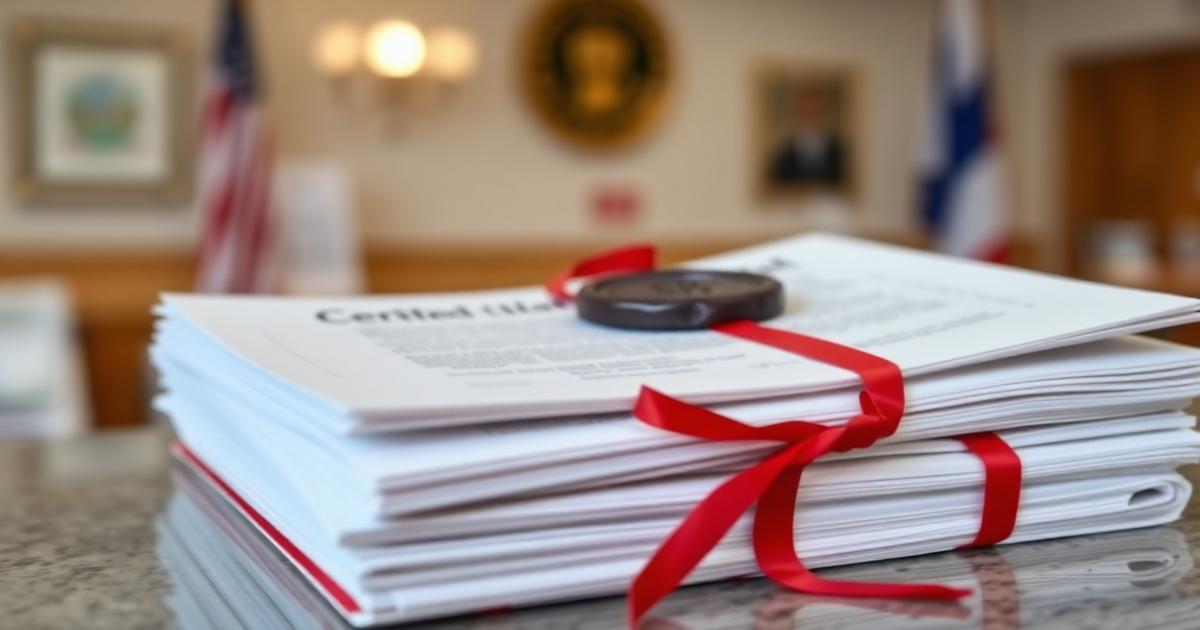
Ribbon-bound certified document set with an official seal awaiting consular legalisation or Apostille
TL;DR
  • Japan IS a Hague Apostille member — embassy legalisation is NOT required
  • Required chain: Thai original → certified Japanese translation → MFA Apostille
  • Total turnaround 5–8 business days; rush 2–3 days available
  • Japanese ward offices (kuyakusho) require translations sealed by an MFA-recognised translator
  • Common use cases: COE, spouse visa, Long-Term Resident, company set-up, real-estate purchase

Why Apostille — not embassy legalisation — for Japan

Japan has been a contracting party to the 1961 Hague Apostille Convention since 27 July 1970, and Thailand's 14 December 2023 accession means a Thai MFA Apostille is now accepted directly by every Japanese receiving authority — including the Ministry of Justice's Legal Affairs Bureau (Hōmukyoku), the Immigration Services Agency, and municipal ward offices nationwide.

The Royal Japanese Embassy in Bangkok has confirmed in its January 2025 circular that it no longer performs consular legalisation for documents that already bear a Thai Apostille. Clients still presenting documents at the Embassy counter are politely redirected back to MFA Chaeng Wattana.

The standard document chain for Japan

Every Japan-bound file follows the same five-step chain: (1) obtain the Thai original or true copy from the issuing authority (Amphur, MoJ, Police, MoE); (2) commission a certified Japanese translation by an MFA-recognised translator; (3) submit both original and translation to MFA Chaeng Wattana for Apostille; (4) verify the QR-coded Apostille on the MFA online register; (5) present the bundle to the Japanese receiving authority.

  • Birth / marriage / death certificate — for koseki update or spouse-visa COE
  • Divorce certificate — for remarriage registration at ward office
  • Police clearance (Royal Thai Police) — for ISA COE applications
  • Academic transcripts and degree certificates — for MEXT scholarships, work visas
  • Company affidavit + DBD certificate — for branch / KK / GK incorporation
  • Power of Attorney — for real-estate purchase, inheritance, share transfers

Certified Japanese translation requirements

Japanese ward offices and the Legal Affairs Bureau accept translations produced by any translator, but in practice rejections fall dramatically when the translation carries the seal of an MFA-recognised translation company. NYC's standard Japanese deliverable carries the translator's name in both rōmaji and kanji, our DBD registration number (0435567000061), and a parallel-column layout matching the Japanese original.

Pricing starts at THB 800 per A4 page for civil documents and THB 1,200 for legal/commercial documents. Turnaround 2–3 business days for standard, 24 hours for rush.

Typical timelines and total cost

From engagement to Apostille-ready bundle, the standard NYC workflow takes 5–8 business days at a total cost between THB 3,800 (single civil document) and THB 12,000 (complete company-incorporation pack of 6–8 documents). Rush service compresses the timeline to 2–3 business days at a 50% surcharge on translation only — MFA fees are not negotiable.

Common rejection reasons at Japanese authorities

Across 240+ Japan-corridor files handled in 2025, three issues drove almost every rejection: (a) Apostille older than 3 months on COE applications (ISA enforces a strict freshness rule); (b) translation produced by a non-registered freelancer without a verifiable company seal; (c) name romanisation that does not match the passport machine-readable zone. NYC's QC checklist eliminates all three before the file leaves our office.

Related service
Japan Document Legalisation
See pricing, timelines & start your order →
Need case-specific advice?

Free 30-min consultation — reply within 15 minutes

Frequently Asked Questions

Do I still need to visit the Japanese Embassy in Bangkok?

No. Since Thailand's Hague accession in December 2023, the Royal Japanese Embassy no longer legalises Thai documents bearing an MFA Apostille — the Apostille alone is sufficient.

Will a Thai Apostille be accepted at my local kuyakusho?

Yes. Every Japanese municipal ward office accepts a Thai Apostille for koseki registration (marriage, divorce, death). Some smaller rural offices may request a courtesy translation summary, which NYC includes by default.

How fresh must my Apostille be for a COE application?

ISA enforces a 3-month freshness window for police clearances and civil-status documents used in Certificate of Eligibility filings. Plan the Apostille step to land within that window.

Can NYC handle the Japanese-side filing too?

NYC partners with a Tokyo-based gyōseishoshi (administrative scrivener) network and can coordinate ward-office submission for spouse visa, COE, and koseki updates at additional cost quoted per case.

Is Apostille accepted for Japanese real-estate purchase?

Yes. The Legal Affairs Bureau accepts Apostilled Thai Powers of Attorney for property registration. Translation must be done by a verifiable translation company — NYC's seal is on the accepted list.

What if my document is in Thai only — no English version?

We translate directly Thai → Japanese without an English intermediate. Single-step translation is preferred because it reduces transliteration drift on names and addresses.

Tags:#japan#apostille#embassy#legalization#translation-japanese

Related articles

Advisors, not just a document-running agency

Talk to our advisory team before you start

Our team has over 15 years of experience in translation, certification, and filings with Thai and overseas authorities. We advise on choosing the correct certification route, sequencing your documents, and repairing files that were previously refused.

  • A case review before work begins, so you only prepare the documents that are genuinely required
  • The correct order of steps from day one, reducing the risk of a refusal and a restart
  • A plain explanation of the destination authority's stated requirements as published at the time of advice
  • If you would rather not handle it yourself, we run the full process end to end and return the finished file

Final acceptance rests with the receiving authority. Our guidance follows the latest verifiable published practice.

Ready to translate?

Most-ordered certified translations

Pick the document and the hub closest to you — prices, queues, turnaround and sample translations all on one page.