N
NYC Legal
Notary · Translation
Legalization

Thailand → Philippines Document Legalisation Corridor 2026 (Hague Apostille Since May 2019)

Philippines has been a Hague Apostille member since 14 May 2019 and Thailand acceded on 30 June 2026 (in force for Thailand 28 February 2027) — Thai documents use Apostille directly for BI, DOLE, PSA, CHED, PRC.

Published 2026-06-28 Updated 2026-06-28 8 min readBy NYC Document Team
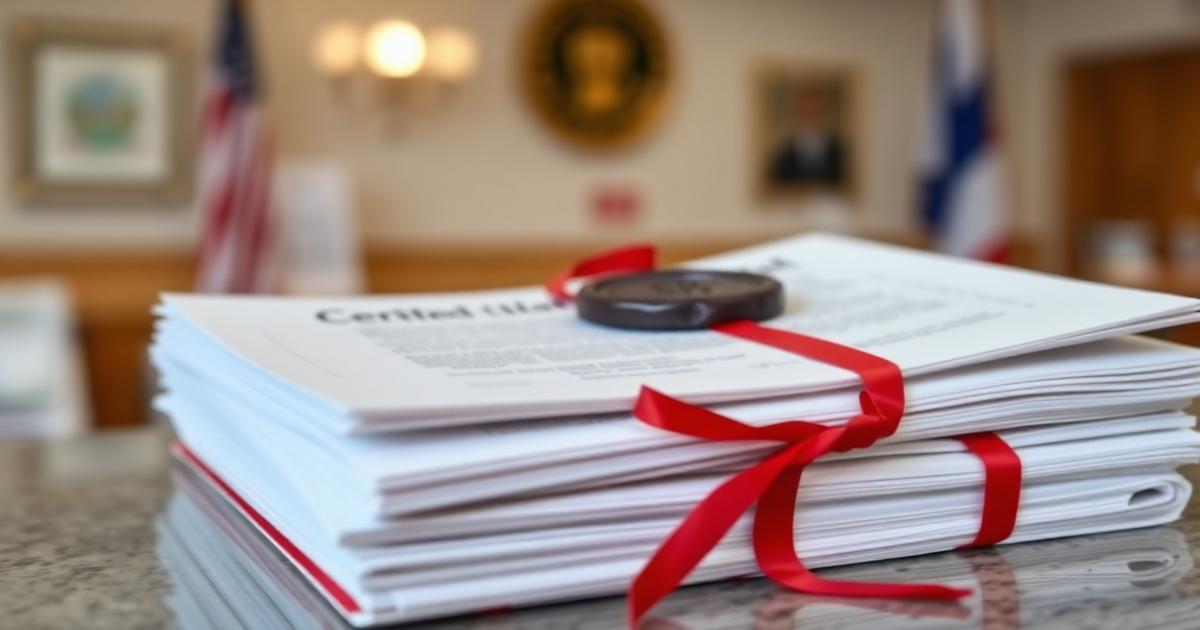
Ribbon-bound certified document set with an official seal awaiting consular legalisation or Apostille
TL;DR
  • Philippines joined Hague 14 May 2019; Thailand 14 Jul 2025 — single-sided Apostille is enough
  • DFA (Department of Foreign Affairs) is the Philippine Apostille Authority
  • Philippine Embassy Bangkok stopped legalising Thai documents from August 2025
  • English is an official language — Filipino translation is not required except for specific agencies
  • End-to-end 3–5 business days; cost from THB 2,000 per document

Philippines: six years of Apostille practice

The Philippines signed the Hague Apostille Convention on 12 September 2018 and it entered into force on 14 May 2019, making it the 116th Contracting Party. The Apostille Authority is the Office of Consular Affairs, Department of Foreign Affairs (DFA-OCA), at the Aseana (Pasay) main office plus regional branches in NCR, Cebu, Davao, and Iloilo accepting both walk-in and online appointments.

After Thailand acceded on 30 June 2026 (in force for Thailand 28 February 2027), Thai documents bearing the MFA Apostille are accepted directly by the Bureau of Immigration (BI), Department of Labor and Employment (DOLE), Philippine Statistics Authority (PSA), Commission on Higher Education (CHED), Professional Regulation Commission (PRC), National Bureau of Investigation (NBI), and Regional Trial Courts. The Philippine Embassy Bangkok stopped legalising Thai documents in August 2025.

Most-requested document types

ACR I-Card (Alien Certificate of Registration): for foreigners staying >59 days, submitted to BI Main Office (Intramuros) with Apostilled police clearance and birth certificate.

AEP (Alien Employment Permit): submitted to DOLE Regional Office with Apostilled degree + transcript + work history; 10–15 days.

Marriage Registration: Thai marriage certificates are registered at PSA Quezon City with the Apostilled certificate + Report of Marriage (ROM) processed at Philippine Embassy Bangkok.

Academic Equivalence (CHED): for studying or teaching in the Philippines, requires Apostilled degree + transcript + WES-style evaluation.

PRC Professional License: for foreign engineers, doctors, nurses — requires Apostilled diploma + license + police clearance + PRC reciprocity check.

Costs and process

Thai MFA Apostille: THB 200/page + NYC handling THB 800/page = THB 1,000/page; 2 business days.

DHL Express to Manila/Cebu: THB 1,200–1,800 per set; 2–3 days.

BI ACR I-Card fees: PHP 2,000 + Express Lane PHP 500 + Annual PHP 310 (~THB 2,000).

DOLE AEP fees: PHP 9,000 initial + PHP 4,000/year renewal (~THB 5,400/3,200).

End-to-end ACR I-Card spouse stack (3 documents): THB 4,500–6,800; 5–7 business days, down from THB 8,500–12,000 pre-Apostille.

Philippines-specific pitfalls

1) English is an official language of the Philippines under the 1987 Constitution — all government offices accept English documents without Filipino translation, except PSA branches outside NCR and Sharia Courts in BARMM.

2) Report of Marriage (ROM): Thai-registered marriages must be reported to Philippine Embassy Bangkok within one year (PHP 1,500) before PSA Quezon City issues a Philippine Marriage Certificate.

3) NBI vs Police Clearance: Philippines uses NBI for domestic checks; Apostilled Thai police clearance is accepted in lieu of NBI at the visa/AEP stage.

4) PRC reciprocity: Thailand and the Philippines have ASEAN MRA reciprocity in civil engineering and accounting.

5) Freshness: BI requires police clearance ≤6 months; PSA allows single-status up to 12 months (longer than most countries).

Related service
Philippines Document Apostille
See pricing, timelines & start your order →
Need case-specific advice?

Free 30-min consultation — reply within 15 minutes

Frequently Asked Questions

When did the Philippines join Hague Apostille?

Signed 12 September 2018, in force 14 May 2019. DFA-OCA branches at Aseana (Pasay), NCR, Cebu, Davao, and Iloilo issue Apostilles. After Thailand acceded on 30 June 2026 (in force for Thailand 28 February 2027), Thai MFA Apostille documents are accepted directly. Philippine Embassy Bangkok stopped legalising Thai documents in August 2025.

What documents are needed for an ACR I-Card?

BI Main Office requires: certified passport copy, Philippine visa (9a/9g/13a), Apostilled police clearance, Apostilled birth certificate (for permanent visas), Apostilled marriage certificate (for 13a spouse visas). Fees PHP 2,000 + Express PHP 500; 1–2 days at BI.

Do I need Filipino translation?

Usually not — English is an official language under the 1987 Constitution. BI, DOLE, CHED, PRC, and NBI accept English directly. Exceptions: PSA branches outside NCR and Sharia Courts in BARMM may require Filipino or Maguindanaon translation, done in-country by a sworn translator at PHP 500–1,500/page.

What is a Report of Marriage (ROM)?

ROM is the process to register a foreign-celebrated marriage into the Philippine PSA system. Filed at Philippine Embassy Bangkok within one year of marriage (PHP 1,500), then forwarded to PSA Quezon City over 6–8 weeks. The resulting PSA Marriage Certificate is used for 13a visas, ACR I-Card, and naturalisation.

How do AEP and 9g working visa differ?

AEP is the DOLE-issued employment permit (PHP 9,000 initial + PHP 4,000/year), required before the visa. 9g is the BI-issued Pre-arranged Employment Visa tied to the employer, filed after AEP approval. Both stacks require the Apostilled police clearance + degree + work history.

Which professions can apply for a PRC license?

PRC reciprocity: Thailand has ASEAN MRA agreements in civil engineering (Engineers) and accounting (Accountants). Other professions (medical, dental, pharmacy, nursing) require graduation from a CHED-recognised Philippine institution or passing a Philippine board exam.

Tags:#philippines#apostille#acr-icard#aep#ched#psa
Advisors, not just a document-running agency

Talk to our advisory team before you start

Our team has over 15 years of experience in translation, certification, and filings with Thai and overseas authorities. We advise on choosing the correct certification route, sequencing your documents, and repairing files that were previously refused.

  • A case review before work begins, so you only prepare the documents that are genuinely required
  • The correct order of steps from day one, reducing the risk of a refusal and a restart
  • A plain explanation of the destination authority's stated requirements as published at the time of advice
  • If you would rather not handle it yourself, we run the full process end to end and return the finished file

Final acceptance rests with the receiving authority. Our guidance follows the latest verifiable published practice.

Ready to translate?

Most-ordered certified translations

Pick the document and the hub closest to you — prices, queues, turnaround and sample translations all on one page.