N
NYC Legal
Notary · Translation
Legalization

Canada Document Legalisation Corridor 2026: Thai MFA Apostille, IRCC, WES, NNAS, MCC

Canada became a Hague Apostille member on 11 January 2024, eighteen months before Thailand's accession. A Thai MFA Apostille is now accepted directly by IRCC, WES, NNAS, MCC, ICAS, and every provincial vital-statistics office — the Canadian Embassy Bangkok no longer legalises Thai documents.

Published 2026-06-28 Updated 2026-06-28 11 min readBy NYC Legal Team
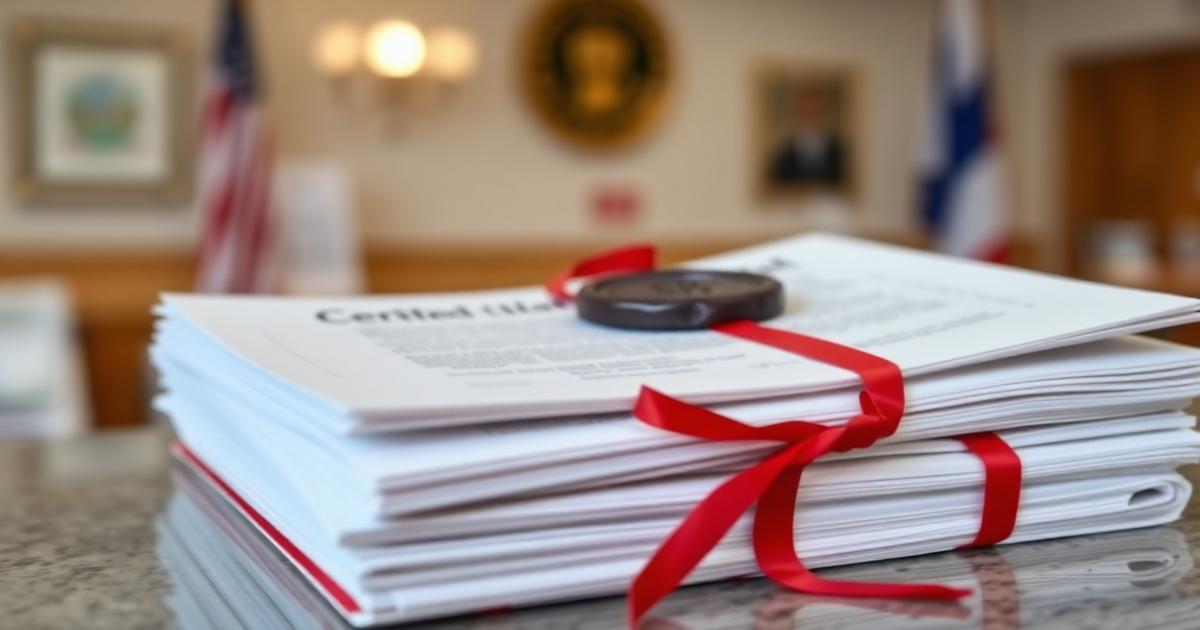
Ribbon-bound certified document set with an official seal awaiting consular legalisation or Apostille
TL;DR
  • Canada joined Hague Apostille on 11 January 2024
  • Thai MFA Apostille accepted by IRCC, WES, NNAS, MCC, ICAS, provincial registrars
  • Canadian Embassy Bangkok will cease Thai-document legalisation 28 February 2027
  • Quebec requires sworn translation by an OTTIAQ-certified traducteur agréé
  • WES ECA: degree + transcript Apostilled, sent directly by Thai institution

Apostille era — no more Global Affairs authentication

Canada acceded to the Hague Apostille Convention on 11 January 2024, replacing the legacy Global Affairs Canada (GAC) Authentication Services + foreign-embassy chain with single-step Apostille issuance. With Thailand's accession on 28 February 2027, both jurisdictions now exchange documents under the same Hague framework. The Canadian Embassy in Bangkok will cease all Thai-document legalisation as of 28 February 2027; the sole and final Thai-side step is the MFA Apostille from the Department of Consular Affairs at Chaeng Wattana.

Apostille issuing authority in Canada varies by document origin: federal documents (RCMP, IRCC, federal court) → Global Affairs Canada Apostille (Ottawa); provincial documents → the issuing province's Official Document Services (Ontario, BC, Alberta, Quebec, etc.). NYC's Canada desk handles the routing for reverse-direction filings (Canadian documents destined for Thai use).

IRCC PR, Work Permit, and Spousal Sponsorship

Thai applicants for Express Entry (PR), PNP, Work Permit, Study Permit, or Spousal Sponsorship submit through the IRCC online portal. Required documents: passport, Apostilled Thai criminal record (Royal Thai Police clearance, ≤6 months), Apostilled birth certificate, Apostilled marriage certificate (for spousal sponsorship), Apostilled IELTS General/CELPIP/PTE Core results, and (for PR) Apostilled degree + WES ECA report (see below).

NYC's IRCC document package: full audit + Apostille + certified English/French translation (sworn for Quebec) + WES institution-to-institution submission + biometric appointment booking at VFS Global Trendy Building. Standard turnaround 10–14 business days for the Thai-side stack. Express Entry CRS-boosting credentials (Master's, PhD) require additional WES expedited processing (USD 100 surcharge, 7 business days).

WES ECA, NNAS, MCC, ICAS — credential evaluation chain

World Education Services (WES) Educational Credential Assessment is the dominant assessor for IRCC PR points and Ontario/BC professional registration. WES requires the issuing Thai institution to mail the original transcript and degree directly to WES Toronto (PO Box 5087, Long Island City NY 11377) — student-supplied copies are rejected. NYC coordinates with Chulalongkorn, Mahidol, Thammasat, Kasetsart, Chiang Mai, and 80+ other Thai universities to dispatch sealed envelopes with the Apostilled documents enclosed. Fee CAD 230 (degree + transcript), 7 business days standard.

Nursing professionals register via NNAS (National Nursing Assessment Service) → provincial College (CNO Ontario, BCCNM, CARNA Alberta, OIIQ Quebec). NNAS requires Apostilled nursing degree + transcript + Thai Nursing Council registration + good standing. Fee USD 650, 12 weeks. Physicians: MCC (Medical Council of Canada) Source Verification via MCC's physiciansapply.ca, fee CAD 350 per credential, 4–8 weeks. Engineers: ICAS or province-specific (PEO Ontario, EGBC) — Apostilled degree + transcript + work experience.

Quebec specifics — OTTIAQ sworn translation and CSQ

Quebec applies its own civil law system and requires sworn translation by a traducteur agréé certified by OTTIAQ (Ordre des traducteurs, terminologues et interprètes agréés du Québec). Documents destined for the Directeur de l'état civil (births, marriages, deaths registered in Quebec), MIFI (Ministère de l'Immigration, de la Francisation et de l'Intégration), or Quebec professional orders must carry an OTTIAQ-stamped French translation. Thai sworn translations are not accepted by Quebec authorities, even with Apostille.

Quebec Selection Certificate (CSQ) under Programme régulier des travailleurs qualifiés or Programme de l'expérience québécoise requires: passport, Apostilled birth/marriage/criminal record, OTTIAQ-translated diplomas and transcripts, French TEF/TCF results, and Quebec employment offer (PEQ-T). NYC partners with three OTTIAQ-certified translation offices in Montreal (Plateau, NDG) for express French sworn translations at CAD 95–145 per page, 5 business days.

Related service
Canada Document Legalisation
See pricing, timelines & start your order →
Need case-specific advice?

Free 30-min consultation — reply within 15 minutes

Frequently Asked Questions

Does IRCC accept Thai-side certified English translations?

Yes for federal IRCC filings (PR, Work Permit, Study Permit) and most provincial registrations outside Quebec. IRCC requires translations to be done by a certified translator with seal and statement of accuracy, or accompanied by an affidavit. NYC's NAATI/ATIO-equivalent certifications are accepted on first review. Quebec separately requires OTTIAQ-certified sworn translation for provincial filings.

How long is a Thai criminal record valid for Canadian PR?

Six months from the date of issuance for IRCC residency programmes (Express Entry, PNP, Spousal Sponsorship). NYC schedules the Royal Thai Police clearance + Apostille + certified English translation within a 25-day window to preserve maximum freshness margin before IRCC submission.

Can WES accept the Apostilled transcript directly from the applicant?

No. WES institution-to-institution policy requires the Thai issuing university to mail the original sealed transcript and degree directly to WES Toronto. Student-supplied copies — even Apostilled and notarised — are rejected. NYC coordinates the dispatch from the registrar's office with the Apostilled documents enclosed in the sealed envelope, and provides the WES reference number to the registrar.

Is the Canadian Embassy in Bangkok still issuing legalisation?

No. Following Canada's Hague accession on 11 January 2024 and Thailand's accession on 28 February 2027, the Canadian Embassy in Bangkok will cease all Thai-document legalisation services. The Thai MFA Apostille is the sole and final Thai-side step, and is accepted directly by IRCC, RCMP, every Canadian province, and federal regulated-profession bodies.

Cost of a complete Express Entry document pack?

Thai side: 5-document pack (degree, transcript, birth, marriage, criminal record) Apostille THB 1,500 + certified English translation THB 3,750 + WES ECA + dispatch THB 4,500 (incl. CAD 230 WES fee) + handling THB 1,500 = approximately THB 11,250 plus IRCC application fees (CAD 1,365 PR + CAD 515 RPRF per adult).

Does Quebec accept WES ECA reports?

No. Quebec uses its own credential-evaluation framework: Évaluation comparative des études effectuées hors du Québec issued by MIFI. Required: OTTIAQ-translated diplomas + transcripts + birth certificate. Fee CAD 121, processing 6–12 months. NYC handles the Thai-Apostille + OTTIAQ-translation stack and forwards to a Montreal immigration consultant for MIFI submission.

Tags:#canada#apostille#ircc#wes#nnas#quebec

Related articles

Advisors, not just a document-running agency

Talk to our advisory team before you start

Our team has over 15 years of experience in translation, certification, and filings with Thai and overseas authorities. We advise on choosing the correct certification route, sequencing your documents, and repairing files that were previously refused.

  • A case review before work begins, so you only prepare the documents that are genuinely required
  • The correct order of steps from day one, reducing the risk of a refusal and a restart
  • A plain explanation of the destination authority's stated requirements as published at the time of advice
  • If you would rather not handle it yourself, we run the full process end to end and return the finished file

Final acceptance rests with the receiving authority. Our guidance follows the latest verifiable published practice.

Ready to translate?

Most-ordered certified translations

Pick the document and the hub closest to you — prices, queues, turnaround and sample translations all on one page.